Opening scene · 1 of 11
Chapter 6 of 18 · Break Duty

Break Duty for the Barely Motivated

Strategic immobility in all weather conditions.

Because supervision is mostly standing convincingly near trouble.

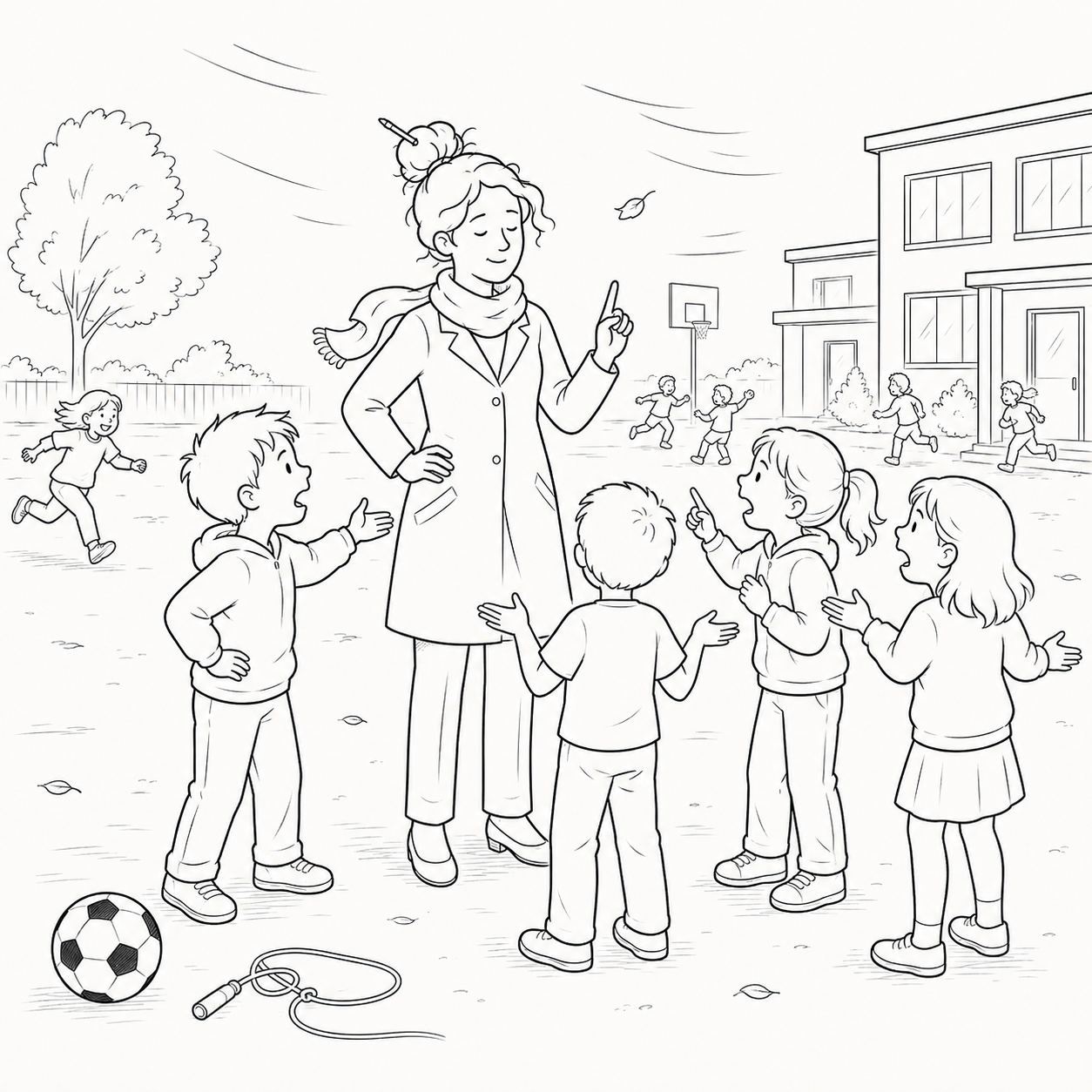
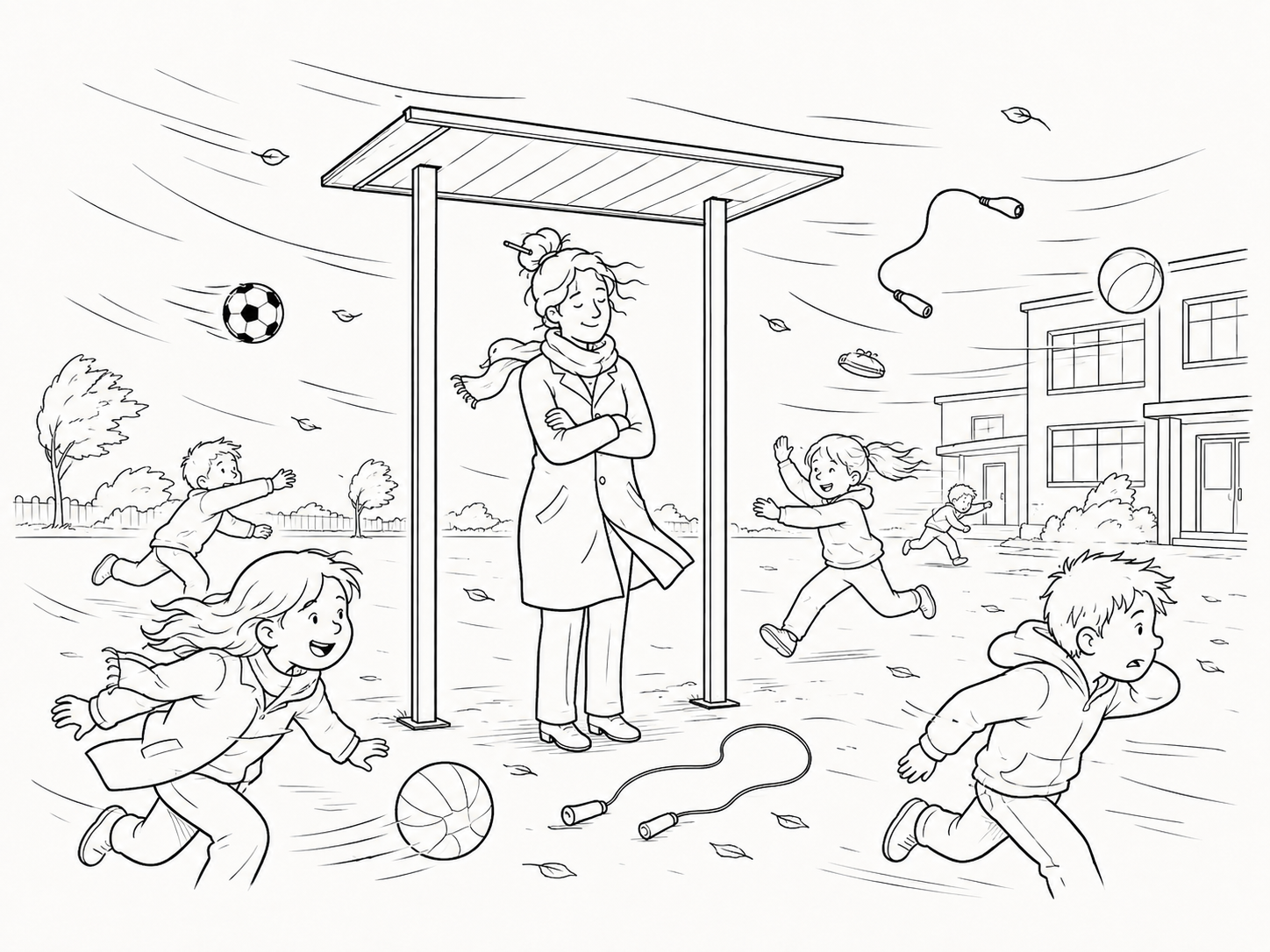
A teacher in a coat stands beneath the only small patch of shelter on a windy playground while balls and skipping ropes fly harmlessly around the scene.
A necessary grown-up note: this is teacher humour, not professional guidance. In real life, follow your school’s policies and professional judgement.
Reading scene · 2 of 11

Break duty: the sacred time of day when you stand outside (or in a corridor, or by a staircase of doom) and “supervise” several hundred children while silently questioning your career choices, your life choices, and the school’s decision to put the playground next to a wind tunnel.

This chapter will teach you how to complete break duty with minimal movement, minimal involvement, and minimal exposure to sudden footballs.

This chapter offers a deliberately low-energy route through the problem.

Reading scene · 3 of 11
Methods 1–2 · Acceptance and positioning

Choose your spot carefully and conserve energy before the whistle

Method 1

Accept Your Fate Before Stepping Outside

The first step in mastering break duty is acceptance.

Accept:

  • That it will be cold
  • That the weather is always worse during your duty slot
  • That no one will ever trade duties with you
  • That the one child who causes all the chaos will magically appear the moment you blink

Once you’ve accepted these universal truths, the suffering becomes… not easier, exactly, but definitely predictable.
Method 2

Choosing the Optimal Standing Spot

Where you stand is everything.

It determines your visibility, your workload, and your chance of being hit by a rogue skipping rope.

Ideal locations:

  • Near a wall (wind protection + leaning surface)
  • In a high-visibility corner where you can see most of the playground without turning your head
  • Near another teacher who looks as unmotivated as you
  • Close enough to the doors to retreat swiftly when the bell rings

Avoid:

  • The football zone
  • The arguing zone
  • The mud zone
  • The zone where children report every minor injustice (“He breathed near me!”)
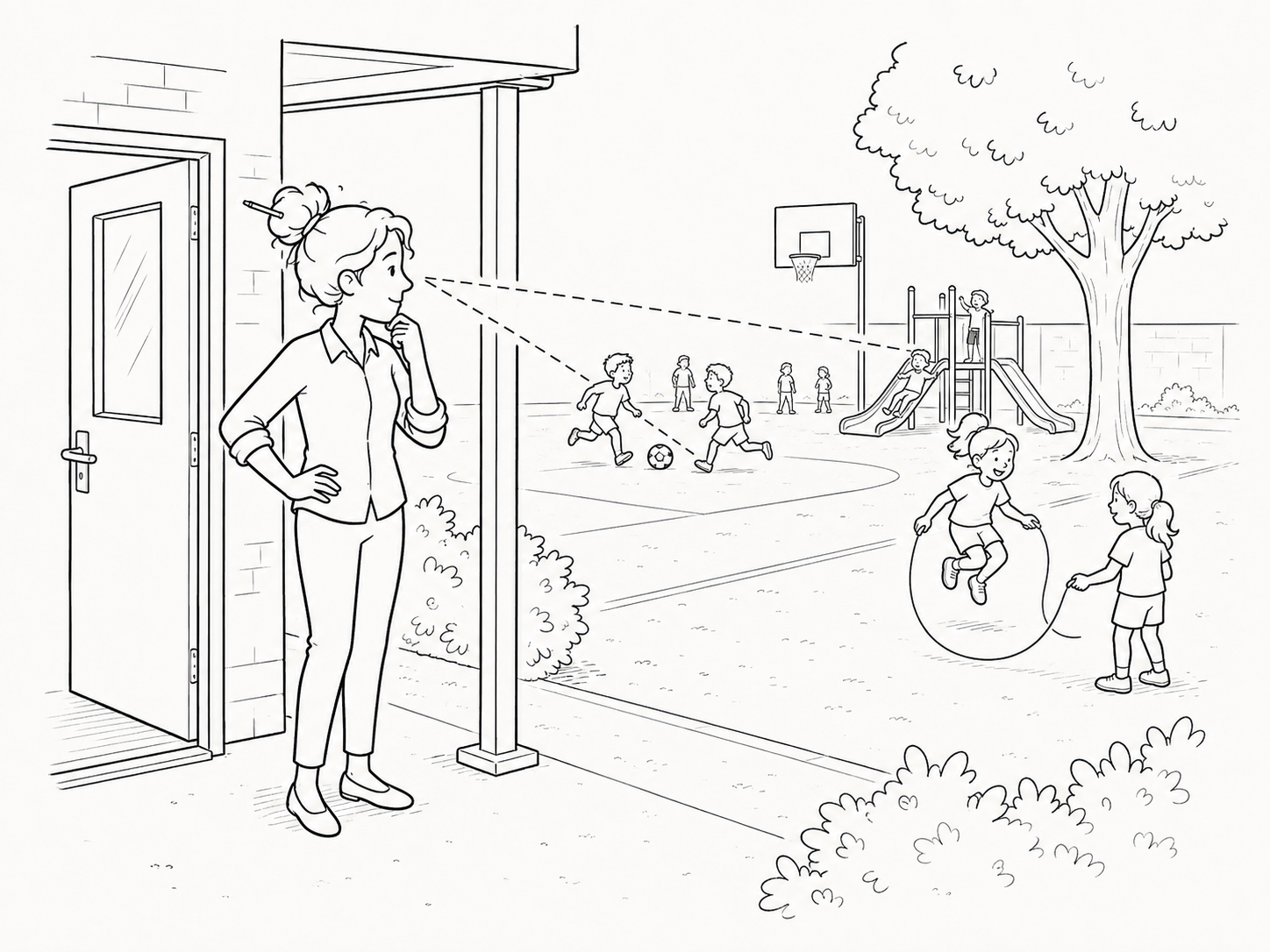
A teacher studies the playground and chooses a sheltered position with a clear view, close to the door but not obviously hiding.
The optimal standing spot.
Reading scene · 4 of 11
Methods 3–4 · Staring and vagueness

Observe everything, commit to almost nothing

Method 3

Mastering the Thousand-Yard Stare

Your eyes should appear to be scanning the playground…

…but in reality, you’re thinking about absolutely nothing.

This stare communicates:

  • Awareness
  • Authority
  • “Don’t come over here unless you’re actively on fire”
Method 4

Responding to Minor Problems With Maximum Vagueness

Students will approach you with every variety of issue.

Use these universal responses:

  • “Sort it out together.”
  • “Take a break from each other.”
  • “Did you use kind words?”
  • “Try walking away.”
  • “Have you spoken to them about it?”
A good duty position offers shelter, visibility and a plausible reason not to move.
Visual scene · 5 of 11
A playground law of nature

Break-Duty Energy Over Time

Energy declines while wind speed and requests for help increase.

Break-Duty Energy Over Time Energy declines while wind speed and requests for help increase. AVAILABLE ENERGY MINUTES ON DUTY HIGH LOW 8am 5pm Fresh optimism Selective hearing Bell hallucinations
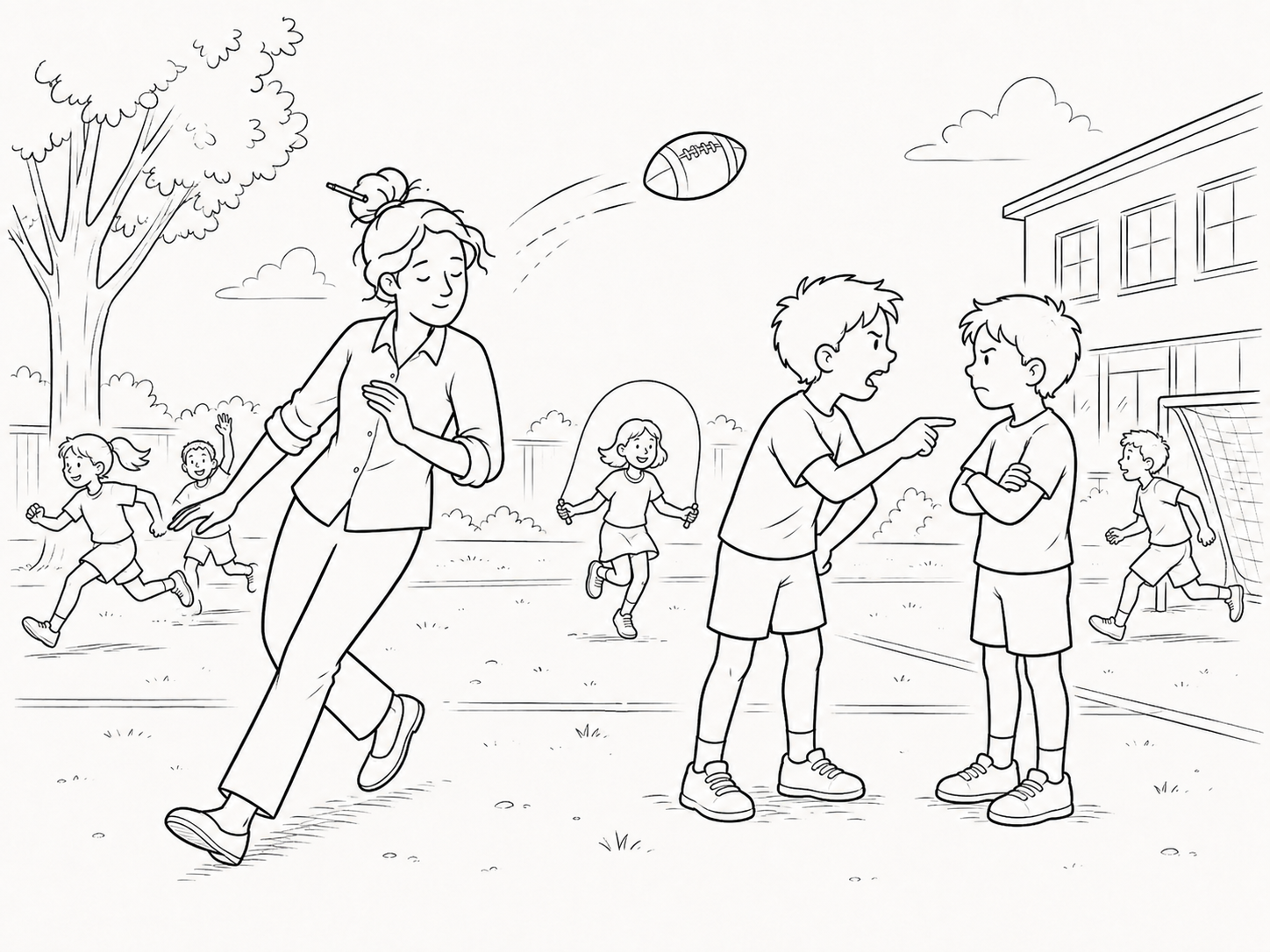
A teacher walks calmly towards a minor disagreement while ducking a passing football without losing composure.
Intervention at medium-slow speed.
Reading scene · 6 of 11
Methods 5–6 · Action and self-defence

Intervene at medium-slow speed and remain alert for airborne objects

Method 5

When Something Actually Requires Action

Sometimes, something happens that even a lazy teacher must address.

Follow the Barely Motivated Action Protocol:

  1. Sigh deeply
  2. Walk over at medium-slow speed
  3. Say, “What’s going on here?”
  4. Nod as if the explanation makes sense
  5. Say, “Right, let’s calm down.”
  6. Walk back to your spot
  7. Pretend everything is resolved
Method 6

Protecting Yourself From Balls, Frisbees, and Flying Objects

Break duty comes with unpredictable flying objects.

Defensive techniques:

  • Wear layers
  • Maintain peripheral vision
  • Duck with dignity
  • Use a colleague as a shield (strategically)

If a ball hits you:

  • Pretend it didn’t hurt
  • Kick it back with surprising skill
Visual scene · 7 of 11
The response ladder

The Playground Intervention Hierarchy

Use the lowest rung that safely resolves the situation.

Walking quickly is reserved for genuine need.

Immediate action
Purposeful walk
Strategic shout
Meaningful stare
Reading scene · 8 of 11
Methods 7–8 · Volume and politics

Use one clear instruction and avoid becoming the playground judiciary

Method 7

The Art of Strategic Yelling

Use yelling only when needed.

The universal teacher shout:

“GUYS—ENOUGH!”

Context irrelevant.

Effect guaranteed.

Method 8

Avoiding Playground Politics

Children will attempt to drag you into drama.

Common complaints:

  • “He took my ball!”
  • “She said I said what she said!”
  • “He stepped on my shadow!”

Use these replies:

  • “Let’s leave it.”
  • “It’s not that deep.”
  • “Move to different areas.”
  • “Enjoy the last five minutes.”
A teacher delivers one clear playground instruction while several pupils immediately offer conflicting versions of events.
Strategic volume, limited arbitration.
Visual scene · 9 of 11
The Final-Five-Minute Plan
Watch the clock without appearing desperate.
Position yourself near the route inside.
Move only after the actual bell.

Because supervision is mostly standing convincingly near trouble.

Reading scene · 10 of 11
Methods 9–10 · Clock and liberation

Count the minutes, hear the bell and return indoors with dignity

Method 9

Watching the Clock Like Your Life Depends on It

Break duty lasts around 97 years.

Or 15 minutes.

Hard to tell.

You will check the clock:

  • After 90 seconds
  • After 40 seconds
  • After 20 seconds
  • Repeatedly
  • Until the bell saves you
Method 10

The Final Bell: Your Moment of Triumph

When the bell rings, you walk—never run—back inside.

You have survived:

  • The cold
  • The drama
  • The flying objects
  • The unnecessary tattling
  • The existential dread

The bell is not merely a sound. It is a rescue operation.

Closing scene · 11 of 11
Final thoughts

You supervised enough.

Break duty is not about perfection. It is about preventing total chaos through strategic positioning, selective attention and calm action when something genuinely needs it.

You watched enough. You supervised enough. You tried enough.

Enjoyed this chapter?

Give the complete paperback edition of The Lazy Teacher Guide to a teacher who deserves a laugh and permission to protect their time.

Buy the book as a gift
↑ Return to the top of the chapter